
Until 2015, Coca-Cola’s product line extension strategy followed the marketing consensus of the time: each new product had its own name and a distinct brand platform. By developing a sub-brand for each product, Coca-Cola could create a variety of offerings that could satisfy different target consumers:
- Coca-Cola Original -- the flagship product, known around the world, always in tune with its fans,
- Coca-Cola Life -- the low-calorie version, with a sweetening system based on stevia,
- Coca-Cola Light Taste -- the calorie-free and sugar-free version for women,
- Coca-Cola Without Sugars / Zero - with the original taste, but without sugars or calories.
The One Brand Strategy
After several years of reflection, Coca-Cola restructured its branding platform. From a fully multi-brand architecture, the strategy is now geared towards the establishment of a Masterbrand. Coca-Cola thus becomes the umbrella brand positioned at the heart of the One Brand Strategy.
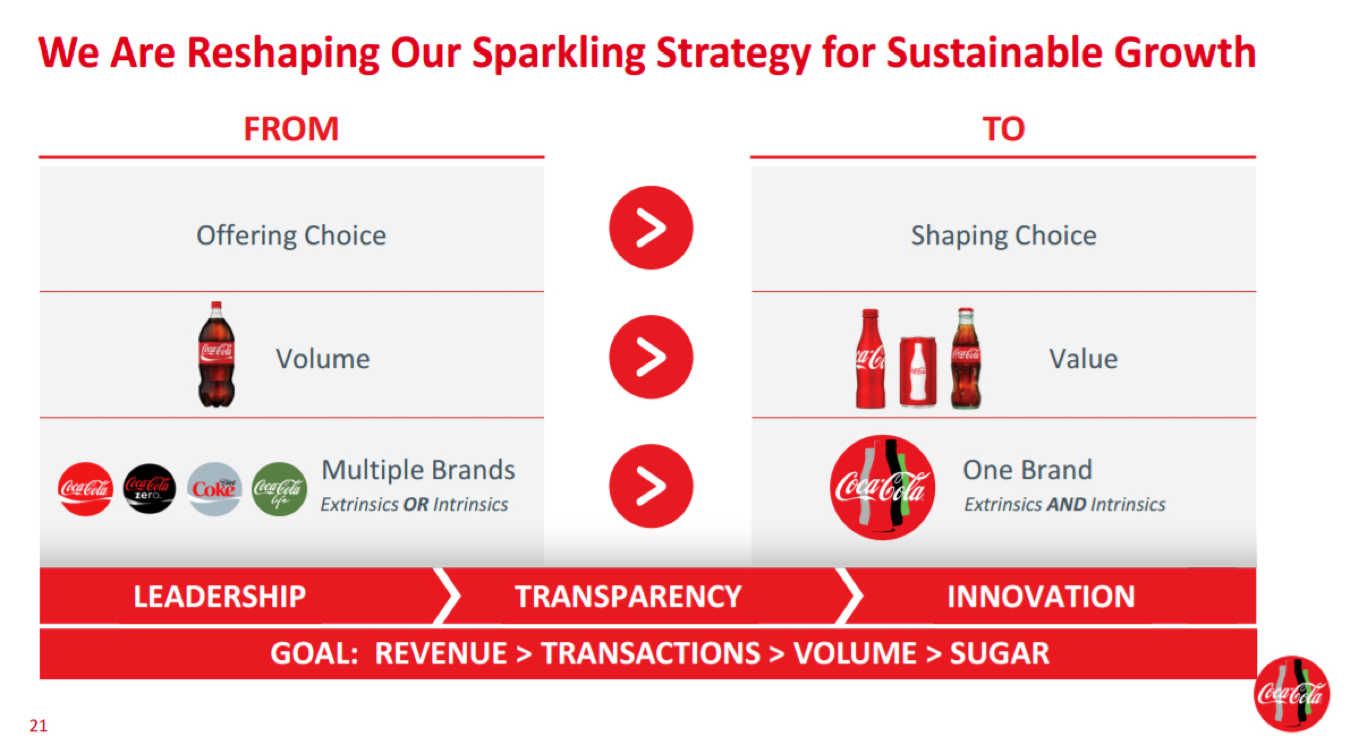
Driven by the major global campaign “Taste the Feeling” (10 Television Commercials, 100+ Campaign Images, New Visual Identity System, New Music Anthem and Audio Signature, Shareable and Customizable Interactive Digital Experience), this strategy allows the firm to bring together the entire cola portfolio behind the Coca-Cola brand equity and standardize the design.
It is also a way to update the portfolio and clarify the Unique Selling Propositions (USP) among sugar-free variants between zero, light and life and make Coca-Cola, “a total brand” dixit James Quincey, the current CEO of The Coca-Cola Company
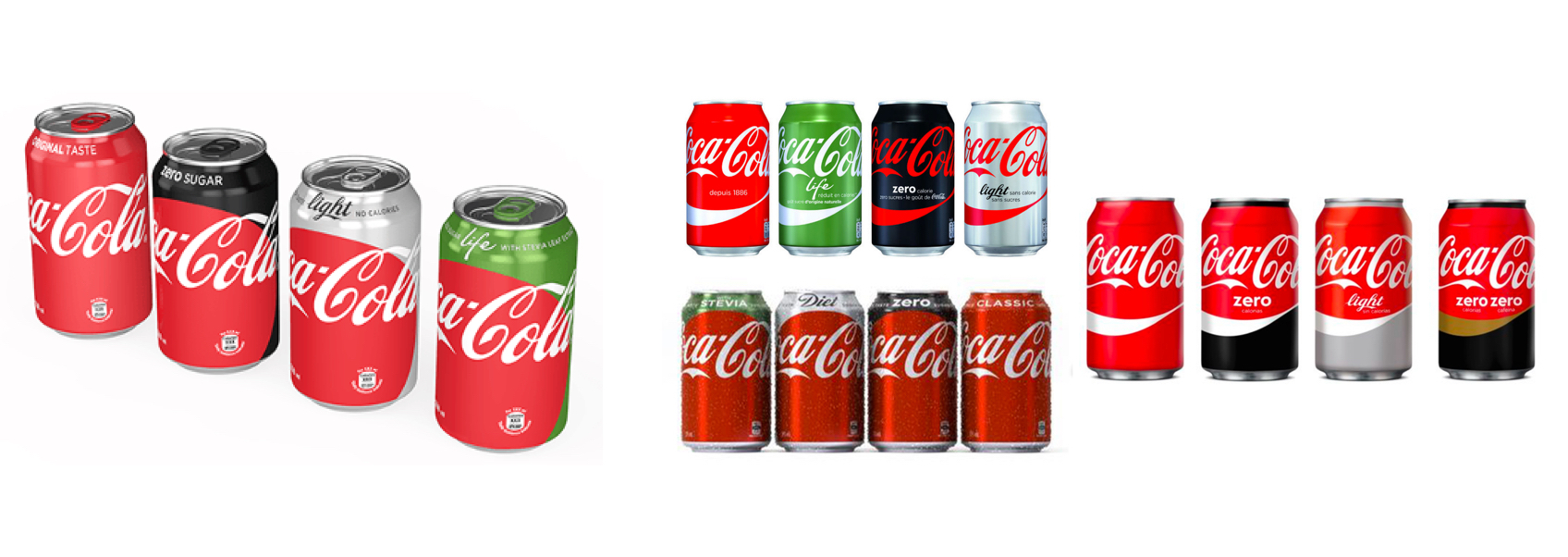
Coca-Cola's "sugar-free" strategy, the common thread of its marketing mindset
The Case of Diet Coke: Coca-Cola, a name no one wants to touchThe first light cola, Diet Rite, was launched by RC Cola in 1958. The Coca-Cola Company not wishing to use the name Coca-Cola other than for its flagship cola, launched a cola light under the name Tab in 1963. Pepsi released its Diet Pepsi a year later, in 1964. Noting the success of its lifelong rival who did not hide its name, The Coca-Cola Company finally resolved to develop a light version of its iconic red can: Diet Coke arrived on the American market in 1982.
Coca-Cola Zero Sugar, conquering the faithful of the cola taste
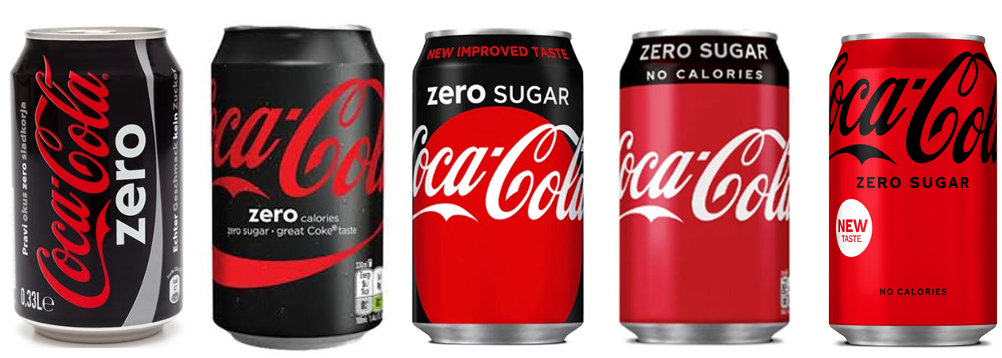
From a specific brand platform targeting a male audience, as opposed to the more female oriented Diet Coke positioning, Coca-Cola Zero has gradually returned to a line extension positioning rather than a stand-alone brand positioning. But the brand platform does not seem to be sufficient to attract consumers who love the authentic cola taste
- In 2018, Coca-Cola introduced the black band to highlight the flavor profile or indicate sugar content.
- In 2021, Coca-Cola concedes to the trend of logo minimalism and streamlines its packaging. It is interesting to note that Coca-Cola Zero Sugar was the first product to benefit from this redesign. The other products will follow. The empty space at the bottom of the cans is part of a "visual metaphor" according to Coca-Cola. The presence of the logo at the top of the can also indicates that the drinks are "stimulating". The new Coca-Cola Zero design has already been launched in Europe and Latin America. The rest of the redesign will roll out globally, and all variants are expected to adopt the new design by 2022.
Coca-Cola Life, what’s bred in the bone will come out in the flesh
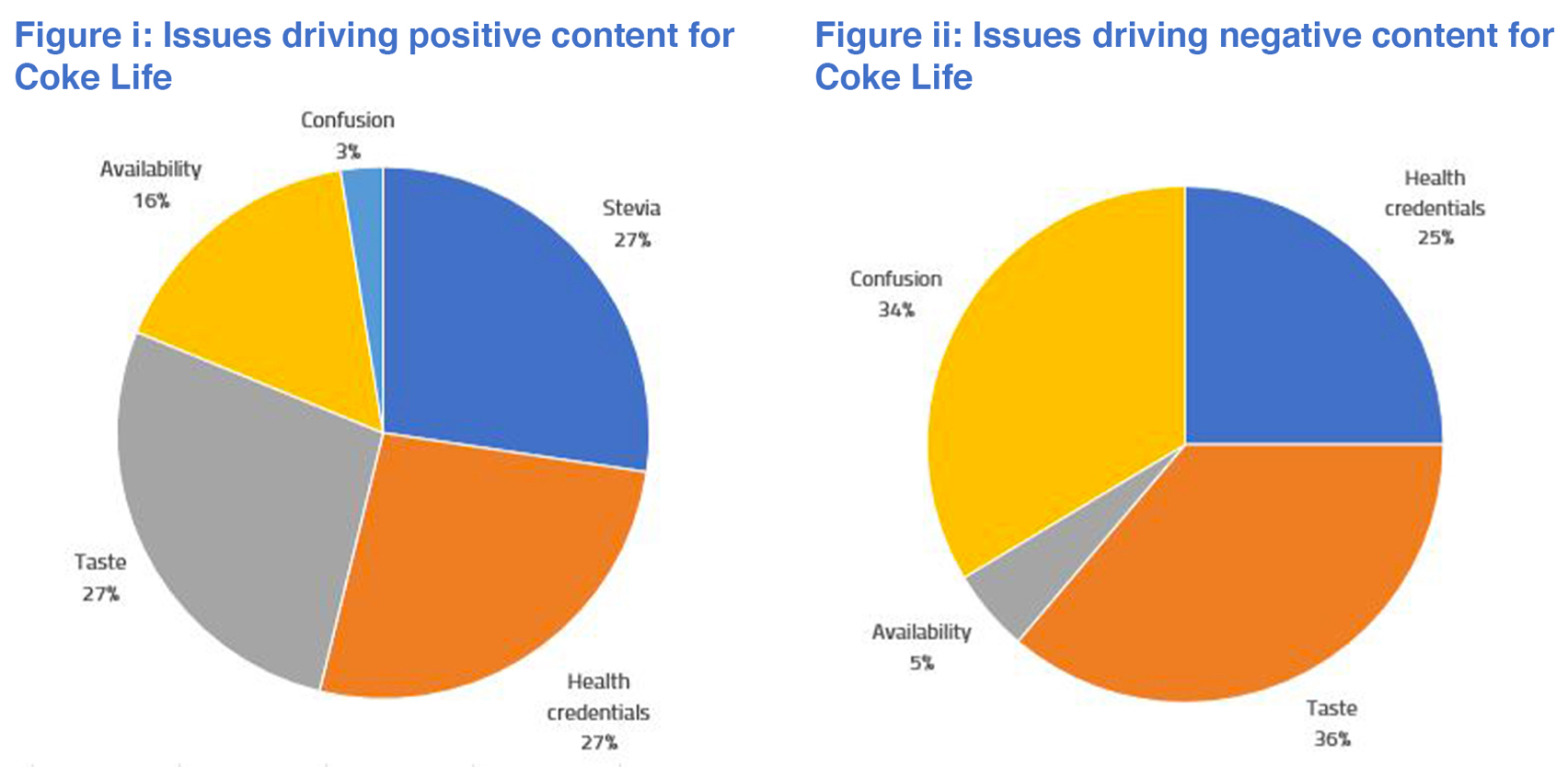
Launched in 2013, Coca-Cola Life has gradually disappeared. Yet it was a highly anticipated product, because of its use of the very trendy stevia ingredient. Nevertheless, the product was not brought in the best way to the markets. The offer was not clear in the face of zero and diet / light. In fact, most consumers health conscious enough to avoid fully sweet cola, saw Coca-Cola Life as an intermediate product which, although more "natural", still contained too much sugar ("as much sugar as three donuts "). Others remained puzzled as to the drink's USP. However, the plan to use stevia has not been abandoned. In New Zealand, a new formula is being tested with the aim to achieve a less pronounced licorice aftertaste
Flavors as portfolio extensions
Recap of some Product Launches within the Coca-Cola range:
- 1886: Coca-Cola Original
- 1982 : Diet Coke
- 1983 : Diet Coke without caffeine
- 1985 : Cherry Coke
- 1986 : Diet Cherry Coke
- 2001 : Diet Coke Lemon
- 2002 : Vanilla Coke & Diet Vanilla Coke
- 2004 : Diet Coke Lime
- 2005 : Coca-Cola Zero arrives on the market in addition to its iconic Original and Diet / Light.
- 2007 : Coca-Cola Orange, Coca-Cola Zero Vanilla and Cherry
- 2013 : Coca-Cola Life
- 2018 : Coca-Cola Zero Raspberry
- 2019 : Coca-Cola Orange Vanilla Full Sugar, Coca-Cola Zero Peach
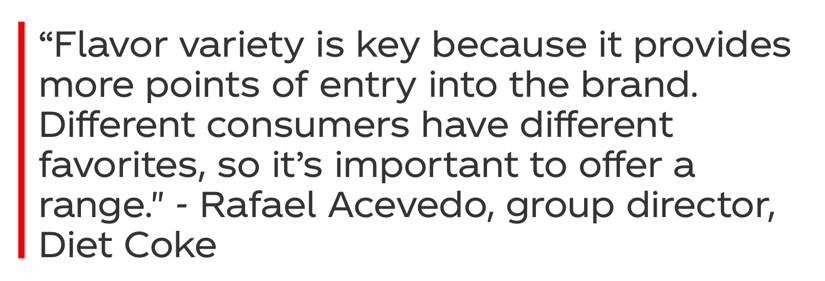
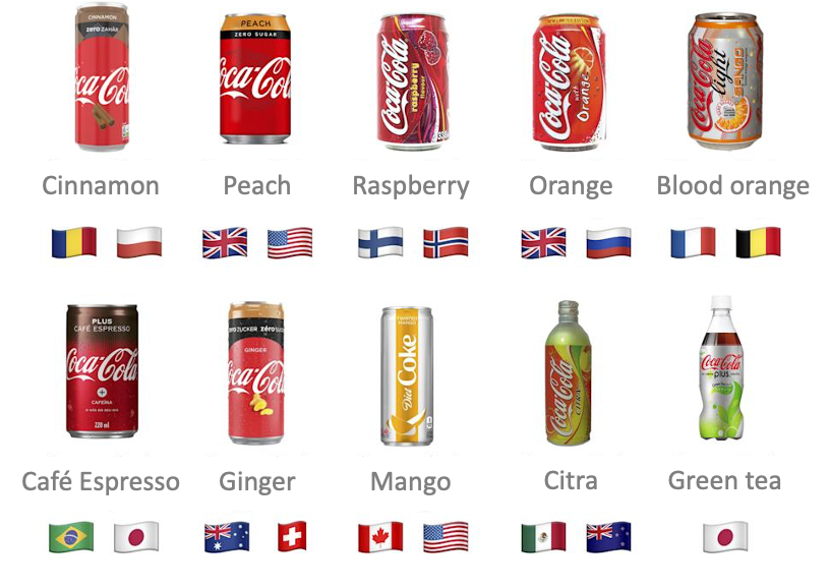
To revitalize its sugar-free range (Zero & Light), Coca-Cola routinely develops original flavors in test markets. In the United Kingdom and the United States, Diet Coke has thus added to its range differentiated flavors such as Blueberry, Ginger-Lime, Strawberry-Guava, Mango, Blood Orange or Cherry
In recent years, The Coca-Cola Company has also been testing new flavors in the country most eager for innovation: Japan. After a transparent Cola, a Coca-Cola Strawberry
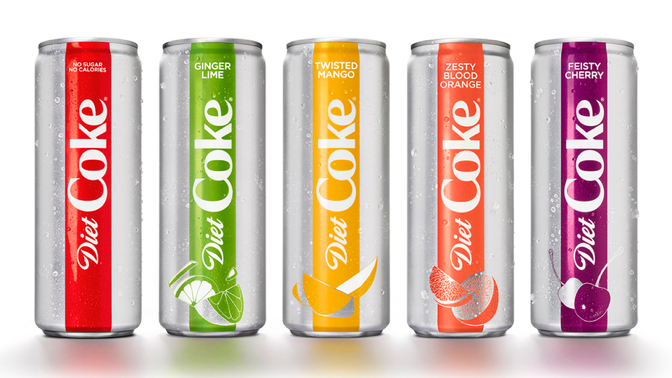
Apple and even Peach were launched before deploying a few flavors deemed relevant in other markets in full sugar or sugar-free versions. Coca-Cola Sugar-Free Peach has markedly followed this development pattern.
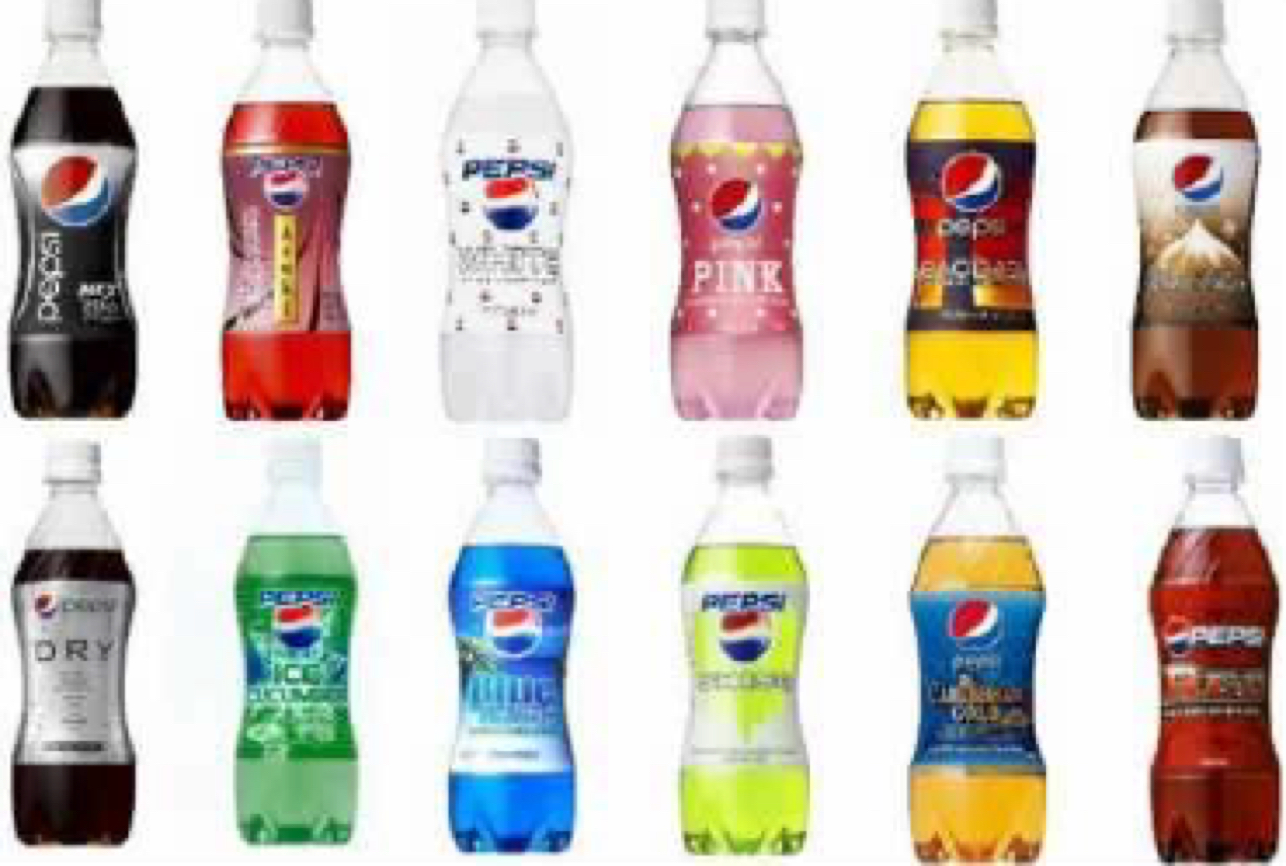
Pepsi does the same with its Pepsi Regular and Pepsi Max references. Last March, Pepsi announced that its mango flavor would become a permanent line item to be distributed in all its markets. In the EMEA region, Pepsi Max is available in Raspberry or Red Fruits as well as Lime flavors.
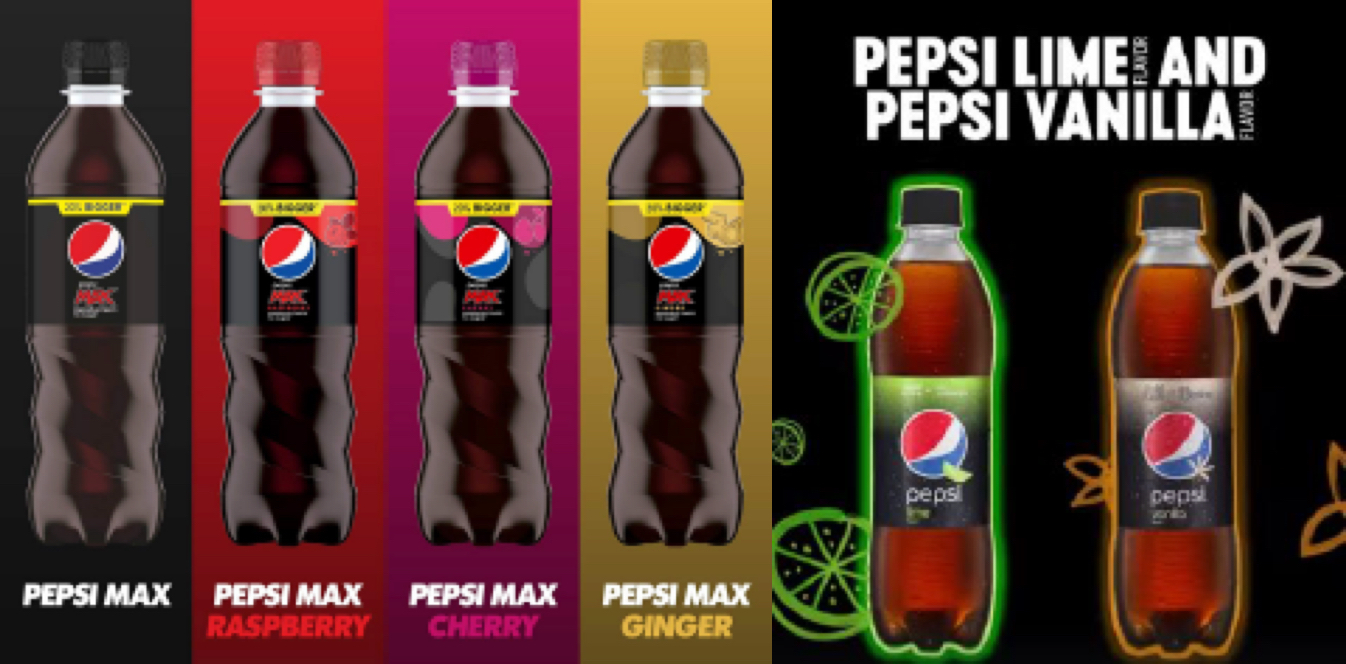
Innovation allows the offer of special editions based on the seasons or main holidays to activate the brand among consumers. The flavor can also act as a marketing happening or a highly localized offering, which leads to drinks with sometimes surprising tastes as illustrated by these few examples.